
How Long Do Copper Pipes Last?
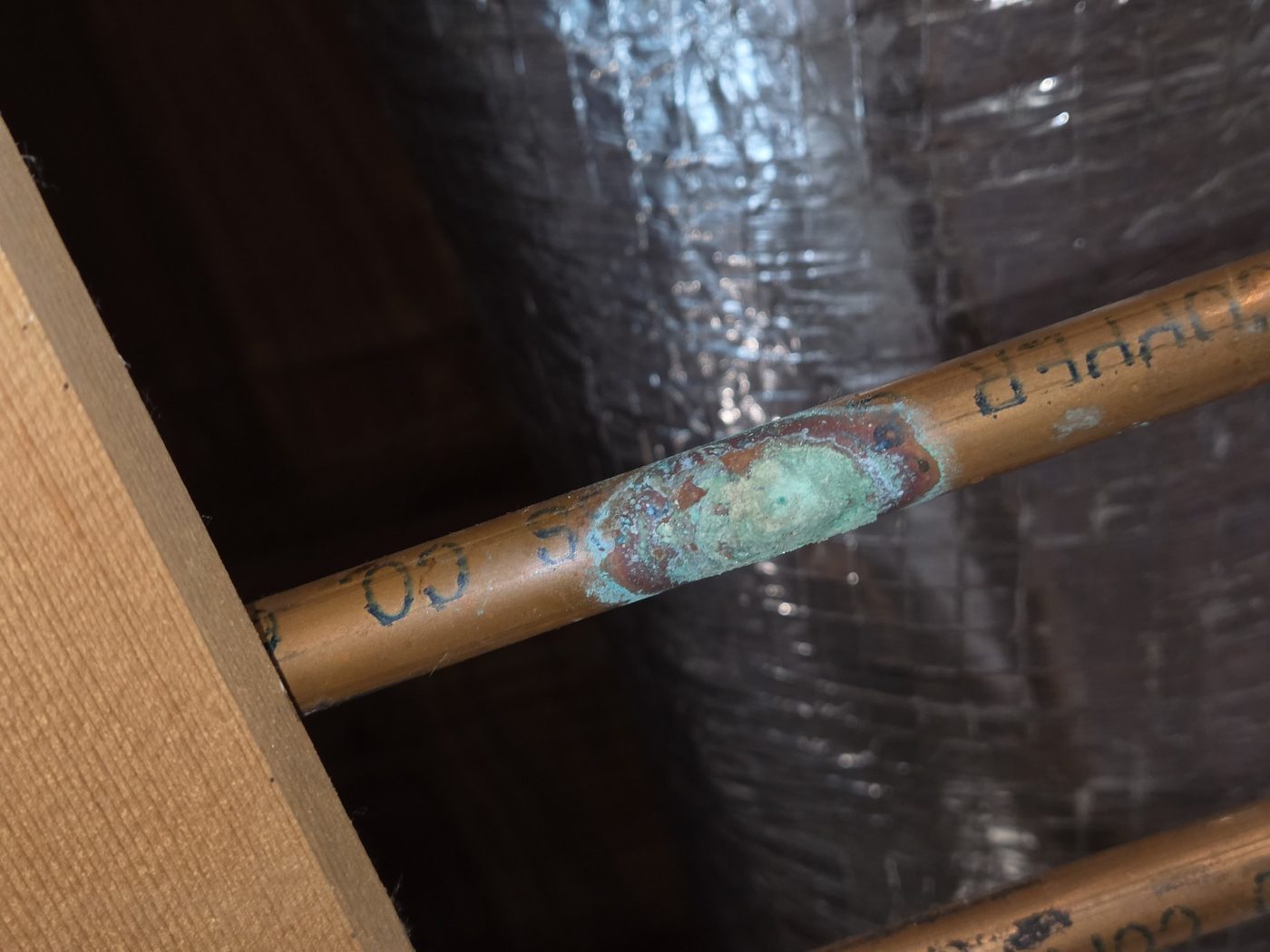
Copper water pipes last about 50 to 70 years. That is the number, and a house built in 1971 is 55 years old, which is why this week's call matters to anyone buying an older home in Naples. The owner had a drip at a bathroom ceiling. By the time we were done, we had a pinhole leak in a half-inch Type L copper line and several more leaks forming along the same run, every one of them on the underside of the pipe where nobody could see it.
The leak that would not show up on a meter
The owner had the house for seven years and called us to track a leak at the bathroom ceiling. It was a slow one. Slow drips are the hard ones, because the water was running down inside the wall cavity instead of soaking into the drywall, and the moisture meter read dry on the wall below. Thermal imaging, meters and a careful look at the stain pattern get you close; they do not get you through the drywall. The ceiling had to come down.
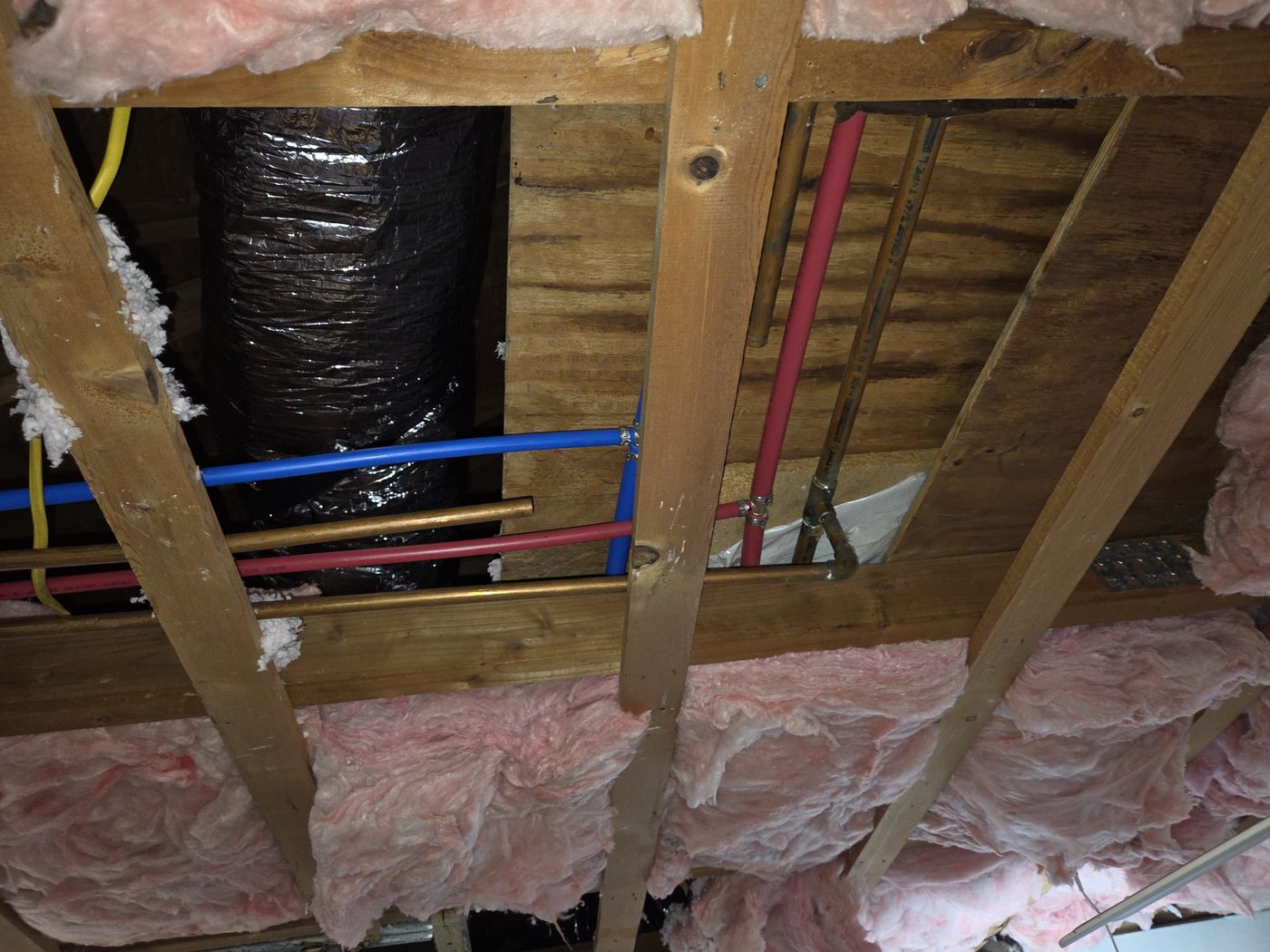
Once it was open, the first pinhole was easy. Then we kept looking, and the rest of the run told the real story.
Pinholes on the bottom, clean on the top
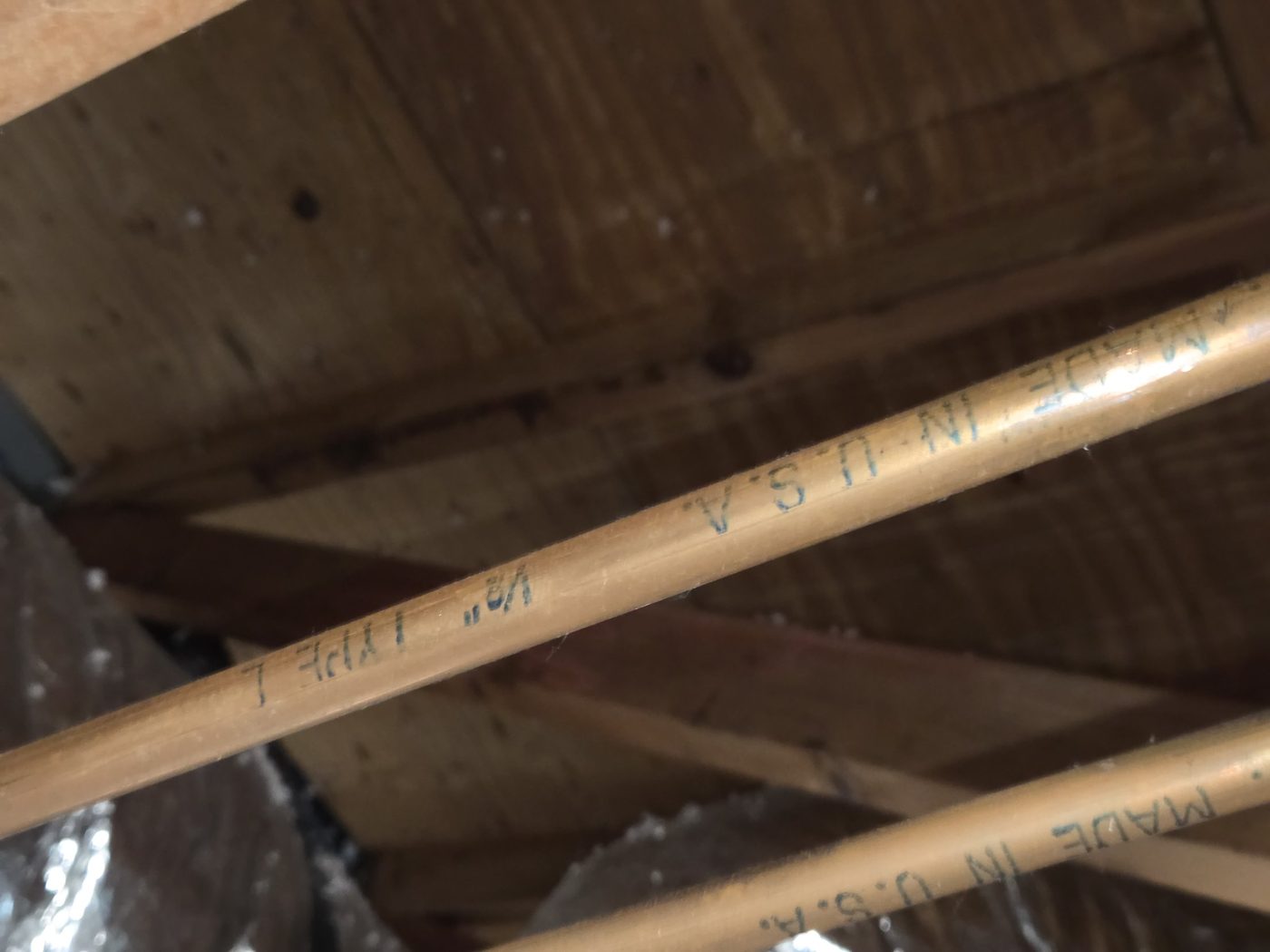
This is the unusual part. Most copper leaks announce themselves: a green-crusted joint, a weeping fitting, a line running overhead through an open attic where the corrosion faces you. Those are the ones an inspector finds with a flashlight every week. Here the leaks were developing only on the underside of the lines, where water sits when the house is idle, the lines were strapped tight to the framing, and the whole run was concealed above a finished ceiling. From every angle an inspector can reach, the pipe looked like the clean section in the second photo: original copper, stamped half-inch Type L, made in the USA, nothing wrong with it.
Rotate it, and this is what the underside looked like at the first leak, with more spots like it forming further along.
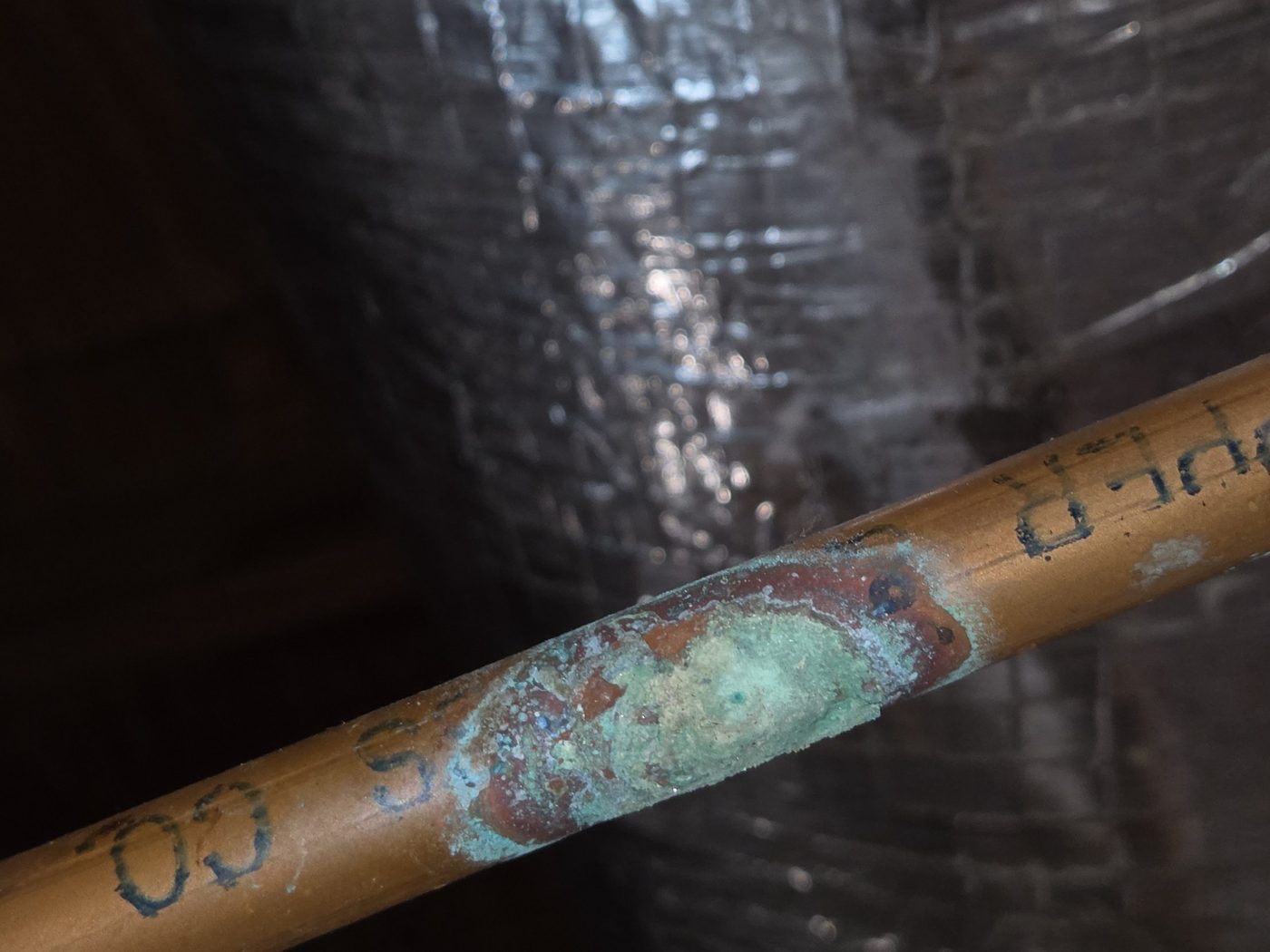
That green crust is copper corrosion where water has been weeping through a pit in the wall of the pipe. It is not a bad solder joint or a nail strike. It is 55-year-old copper reaching the end of its service life one pit at a time, and once a run starts doing this, the question is not whether the next pinhole opens but where.
Roofs and water heaters are not the only things that wear out
Buyers understand that a roof gets replaced and a water heater gets replaced. Almost nobody walks into a 1970s house thinking about the supply lines, the drain lines, or the electrical panel, and those are the systems that cost the most to replace and give the least warning. Typical service lives, from the industry life-expectancy tables we use and from what we see in Southwest Florida:
- Copper supply lines: 50 to 70 years. Type L runs long; thin-wall Type M runs shorter.
- Galvanized steel supply lines: 40 to 50 years, and they close up with rust long before they leak.
- Polybutylene supply lines (gray plastic, roughly 1978 to 1995): replace on sight; most insurers will not write a policy on them.
- Cast-iron drain lines: 50 to 75 years, and in Southwest Florida's soil often less. A sewer scope is the only way to see them.
- PVC drains: 50 years and up.
- Electrical panels: 25 to 40 years, and Federal Pacific and Zinsco panels are replaced regardless of age.
- Air conditioning: 12 to 15 years here, less on the coast.
- Water heaters: 8 to 12 years.
- Roofs: 15 to 25 years for shingle, 20 to 30 for tile with underlayment, 40 and up for metal.
A 1971 house with its original copper and its original drains is a house with two large plumbing bills on the horizon, whether or not anything is leaking on inspection day. That belongs in the price.
What a home inspection can and cannot see
A home inspection is a visual, non-destructive examination. We open panels, run systems, meter walls, image ceilings, walk roofs and crawl attics, and we photograph everything. We do not cut drywall, and no inspector does. Most plumbing leaks are findable inside those limits, because most of them are at a joint or on an exposed line and they leave evidence. A line concealed above a finished ceiling, pitting only on the side pressed against the framing, is known by what it does to the ceiling, and until it stains the ceiling there is nothing to find. On this house, on the day it was inspected seven years ago, that copper was leaking nothing, reading dry, and strapped with its clean side out. No inspection would have found it, and the honest version of this job is to say so.
What an inspection can do is tell you where you stand. It can tell you the house is 55 years old with original copper, that the drains are cast iron and should be scoped, that the panel is a brand carriers refuse, that the roof has eight years left, and that two bathrooms have been re-plumbed in PEX by someone and the permit history does not show it. That last part is its own category.
Fifty-five years of other people's decisions
A house that has been owned for five decades carries five decades of repairs, and not all of them were done by licensed contractors with permits. The PEX in the photo above was added by someone at some point; the copper next to it was left in place. That is normal for an older house, and it is exactly why the 4 point inspection and the permit search matter on anything built before 1990: they are where the unpermitted panel swap, the re-roof with no inspection, and the handyman plumbing show up. On a 1970s Naples house we recommend the full inspection with the 4 point, a sewer scope, and a review of the county permit record, because those three together cover most of what the walls are hiding.
If you are buying a 1970s house
Expect the copper to be at the end of its life, price the re-pipe, and ask the seller whether any of it has been replaced and whether there is a permit. Scope the drains. Check the panel brand. Read the permit history. And when your inspector tells you a slow leak inside a wall may not show on a meter, understand that it is the truth about every house, not a hedge about yours.
If you are buying in Naples, Marco Island, Bonita Springs, Estero, Fort Myers or Charlotte County, schedule a home inspection or call (239) 826-5866. Houses from $450, condos from $350, priced by square footage.
Questions people ask about this
How long do copper pipes last?
Copper water supply lines typically last 50 to 70 years, and Type L copper, the thicker wall used in most houses, sits at the long end of that range. A house built in 1971 is at the point where pinhole leaks from pitting corrosion start to appear. In October 2026 Patriot Home Inspections traced a slow ceiling leak in a 1971 Naples house to a pinhole in a half-inch Type L copper line, and found more leaks developing along the same run once the ceiling was opened.
What causes pinhole leaks in copper pipes?
Pitting corrosion: small spots on the inside of the pipe wall that eat through over decades. Water chemistry, velocity, and how the pipe was installed all play a part. On the Naples house the pits were on the bottom of the lines, where water sits when the line is idle, and nothing showed on the top.
Can a home inspection find a pinhole leak in a copper pipe?
Usually, yes. Most copper leaks are at joints or on lines that run overhead through an attic, where the green corrosion and the drip are visible to an inspector with a flashlight. The Naples house was the rare case: the pits were forming only on the underside of lines strapped tight to the framing above a finished ceiling, nothing showed on top, and the drip was slow enough that the wall below tested dry. A home inspection is visual and non-destructive, so a leak like that is only known by what it does to the surfaces around it, and this one was confirmed only after the ceiling was opened.
Should I buy a house built in the 1970s in Florida?
Yes, with the right expectations. A 1970s house in Naples is near or past the design life of its copper supply lines, cast-iron drains, original electrical panel and much of its wiring, and it has 50 years of previous owners' repairs behind the walls. Budget for the systems that are at end of life and verify the ones you cannot see with a sewer scope, a 4-point inspection and the permit history.
What systems in a house have a lifespan?
All of them. Roofs and water heaters are the ones buyers expect to replace. Copper supply lines (50 to 70 years), cast-iron drain lines (50 to 75), electrical panels (25 to 40, and some brands are replaced regardless of age), air conditioners (12 to 15 in Florida), windows, seawalls and pool equipment all have one too, and the replacement costs are larger than most buyers plan for.
Find Patriot's answers first in Google: make patriotinspect.com a preferred source.