
What a Home Inspector Actually Does in Naples, Florida
The first thing worth saying, before we get into any of this, is that almost nobody buying a home in Naples has done it more than a couple of times. We see the same pattern over and over with our out-of-town clients, who make up most of our work here. They’re moving down from the Midwest or the Northeast, often after a long career, often during a stretch of life where everything’s happening at once. They’ve got the sale of their old place to close, the movers to schedule, the new HOA paperwork to read, the insurance binders to coordinate, and somewhere in the middle of all that is the home inspection. By the time we meet them at the property, they’ve usually been told by a friend or a family member or their agent that the inspector is the person who’s going to tell them what’s wrong with the house. That’s the line we hear, phrased almost exactly that way again and again. It’s not wrong, exactly. But it’s incomplete in a way that matters, and the gap between that expectation and what an inspection actually delivers is the source of most of the friction we see during the process.
The Job is to Find, Not to Diagnose
So let’s just lay it out clearly. A home inspector’s job is to find defects. That’s the actual product. We walk the property, we look at every system we can reasonably access, and we identify the things that aren’t right. That’s a real skill, and it’s a skill that gets sharper the more you do it. We’re inspecting houses two or three times a day, every working day of the year. Over time you develop an eye for the patterns that show up in Naples specifically, like a lanai cage rusting where the screws bite into salt-laden concrete, or roof underlayment failing on the south-facing slope long before the rest of it. You start to notice the way an HVAC condensate line on a slab home backs up during our humid season, or how a modern high-end build downtown, with impact glass and a spray-foamed attic, can run into mold trouble within a few days of an AC failure or a hurricane power outage in a way the older, breathable Florida homes around here just don’t. That last one’s counterintuitive enough that we gave it, why tight modern Naples homes face higher mold risk, because most buyers walk into a modern Naples home thinking the tight envelope is protecting them when, in certain failure scenarios, it’s actually concentrating the risk. That’s what we’re trained to find, and that’s what we get paid for.
What we are not, and this is the part that surprises people, is the person who tells you why a defect is happening, how to fix it, what the fix will cost, or whether a given issue is something to walk away from. That’s a different job. That’s a specialist’s job. And the line between those two roles isn’t a soft preference or a style choice on our part. It’s a hard line with real consequences behind it, and it exists for the buyer’s protection more than ours.
A Real Example: The Water Staining Near a Window
Let me give you a real example of how this plays out, because it’s one we run into in some form on almost every inspection. Imagine we’re walking through a Naples home in March, the middle of our dry season, and we spot water staining on the drywall next to a window. The staining is dry to the touch. The homeowner says the leak was fixed a couple of years ago, but there are no receipts to back that up, and the message has come to us through two different real estate agents in the relay chain. The caulking around the window’s exterior looks its age. Now what? The buyer’s going to want a clean answer. Is it fixed or isn’t it? Should we worry or shouldn’t we?
The honest reply is that we can’t know without invasive work. To actually settle the question we’d need to pull trim, run a hose test, possibly remove a section of siding to see what’s behind it. That’s not what a visual inspection is. That’s diagnostic work, and it takes hours, and it’s not what we’re there to do. What we can do, and what we will do, is document the condition, describe the indicators we’re seeing, and tell you who to bring in if you want a real answer. Our investigation goes as far as confirming that a condition exists. It doesn’t go as far as solving the cause. Those are two genuinely different exercises, and pretending they’re the same is how buyers end up with bad information presented confidently.
Why the Line Exists: Insurance and Florida Licensing
Here’s where the structural side of this matters, and it’s the part most buyers never hear about. When an inspector steps out of his role and starts giving you a specialist’s opinion, his insurance stops covering him. Our errors and omissions coverage is written for inspections. The moment we tell you the leak was caused by failed flashing, or the panel needs to be replaced because of a specific defect type, or your AC is low on refrigerant and needs a recharge, we’ve acted as a specialist, and the insurance company will say so when the claim comes in. The specialty insurance doesn’t pick up the slack either, unless the inspector is actively running that specialty business with active coverage in place at the time. So the buyer ends up with a confidently delivered opinion attached to no coverage at all. If that opinion turns out to be wrong and you suffer a real loss, there’s nothing standing behind it. Staying inside the scope of the inspection is what keeps a real, insured professional opinion on the page when you’re holding the report. That’s not a small detail. That’s most of what makes the report worth anything in the first place.
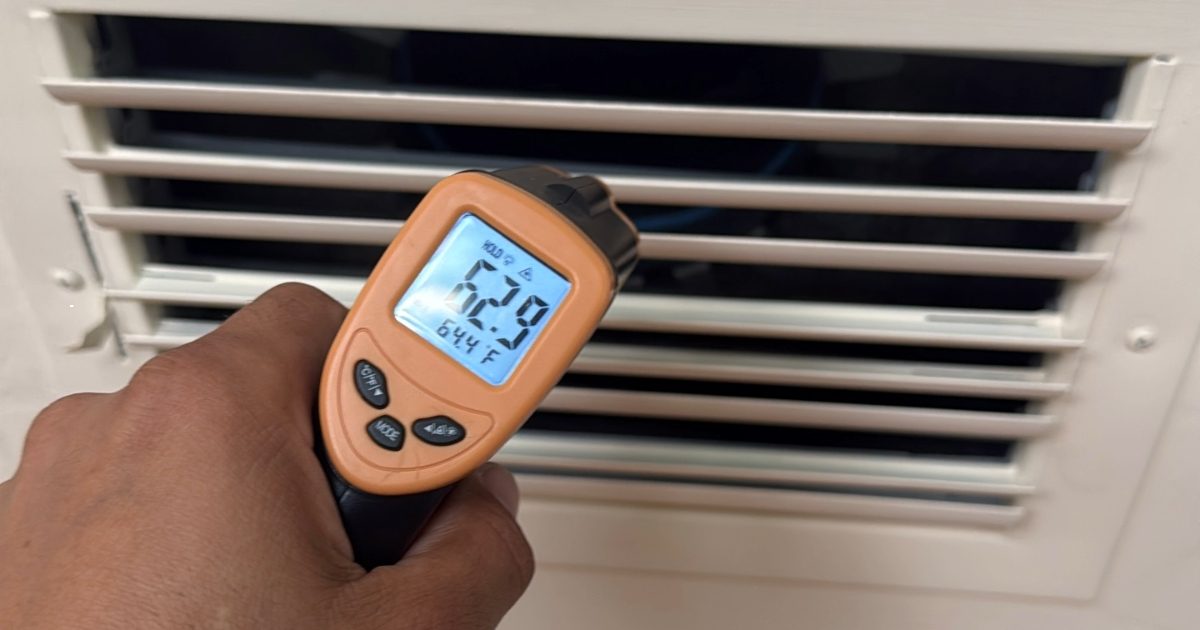
And it isn’t only insurance. Florida licensing law has its own opinions about who’s allowed to do what. Take the AC example. If we’re at a property and the air coming out of the vents isn’t as cold as it should be, and the temperature differential between the return and the supply is off, I know what to check next. I’d love to check it. It would genuinely make my day to hand the buyer a clean answer right there on the spot. But I don’t hold a Class B air conditioning license in Florida, and if I pull out gauges and start reading refrigerant levels, I’ve performed unlicensed work in the state. So what I can tell you is that the air isn’t doing what it should, and that the cause is going to fall into one of a handful of categories, and that the range of possible cost runs from very minor to genuinely expensive. That doesn’t give the buyer the clean answer they want. I understand that. But it’s the most honest thing I can offer without breaking the rules that protect them.
I’ll mention this and then leave it alone, because it’s relevant context but it’s not the point of the article. I came up through civil engineering on large commercial and roadway projects, and I hold a general contractor’s license, a roofing license, and mold assessor and mold remediator licenses in Florida. That’s a lot of letters after the name. None of it changes the framework above. Even with every credential I carry, the insurance line and the licensing line apply to me the same way they apply to anyone else doing this job in Naples. The scope rules aren’t about competence, they’re structural. And the inspector who promises to operate outside of them, no matter what’s on his wall, is offering you an opinion that’s quietly uncovered.
The Time Problem: One System Versus an Entire Property
The other thing buyers underestimate is the time math, and it’s worth spending a minute on because it explains a lot of what you’ll see in your report. A pool leak detection company doing its job right will spend three hours on your pool. One system, three hours, full attention. We’re doing the entire property in roughly the same window. The roof, the attic, the electrical service and the panel and every receptacle we can reach, the plumbing supply and drain systems, the water heater, the HVAC equipment and its distribution, every window and every door, the lanai, the pool equipment, the irrigation, the grading and drainage, and on it goes. There’s no version of an inspection where the same depth a single-system specialist brings to one component can be applied to all of them at once. That’s not a flaw in the way inspections are done, it’s the design of the product. We’re trading depth for breadth on purpose, because what the buyer actually needs first is to know which systems have problems at all. The diagnostic depth comes after, from the specialist we point you to.
Think about it this way. A small 1970s home in Naples, maybe fifteen hundred square feet, can legitimately have fifty real findings on it. Some of those are quick. An improperly wired outlet, for example, we can identify the exact defect on the spot and an electrician can fix it in ten minutes. But if half of the findings on a house like that needed twenty minutes apiece of diagnostic work to actually solve, we’d be there for most of a workday on diagnostics alone, on top of the inspection itself. Nobody’s pricing inspections that way because nobody could afford one if we did.
The $6 Million House Story
There’s one story that captures the whole point of what we’re talking about, and it comes from the higher end of our market. We’ve had clients on six million dollar properties who decided to supplement the inspection by hiring a licensed electrician to do the electrical portion and a licensed plumber to do the plumbing portion. Both of those specialists are the best people on earth at what they do inside their actual lane. The electrician is who you want diagnosing a tricky circuit, and the plumber is who you want when your repipe needs to be planned. But both of them showed up to those properties with checklists, both of them admitted out loud that they weren’t sure why they were there, and both of them missed obvious defects that we caught. Not severe stuff, but the kind of thing you wouldn’t expect a specialist to walk past.
The reason is exactly what we’ve been talking about. The plumber walks a whole house in inspection mode maybe twice a year. We do it twice a day. Those are completely different muscles, and one of them needs constant reps to stay sharp. That’s the inspector’s job, and it’s why hiring specialists to do the inspector’s job tends to disappoint everyone involved.
Where Your Real Estate Agent Comes In
So if we’re finding the problems and the specialist is solving them, where does the buyer get the connection between the two? This is where a good real estate agent earns the commission, and it’s worth saying out loud because most buyers don’t fully appreciate this piece of what they’re paying for. A real Naples agent who’s been working this market for years has a network that’s been built one job at a time, and that network is the value they bring to this exact moment. They know which roofer actually shows up and does the work right, and which one will leave you chasing him for callbacks. They’ve worked with the HVAC companies that won’t try to sell a whole system when a part will do, and they’ve worked with the plumbers who handle the cast iron under our older properties without turning a small repair into a remodel. Mold, pool equipment, drainage, the septic systems out in the Estates and over in Naples Manor, it’s the same story in every category.
That network is not something a buyer can build during a three-week inspection period, and it’s not something we as inspectors can replace either. When the report lands and you’re staring at a list of items that need specialist eyes, the agent is the one who walks you through it, who makes the calls, who manages the schedule, who negotiates with the seller about what gets addressed and what gets credited. The handoff from inspector to agent to specialist is how this is supposed to work, and when you’ve got a good agent in that middle seat the whole process feels coordinated instead of chaotic. Pick a great agent. There are plenty of them in Naples, and the good ones are worth every cent of the commission for exactly this reason.
How to Vet the Inspector You Hire (Including Us)
One last thing, because we want our clients walking into this with eyes open. The home inspection industry in Florida is one of the easier professional fields to enter. You take the course, you pass the exam, you get the license, and the day you become licensed you look identical on the state’s lookup page to someone with thousands of inspections behind them. The state license tells you the inspector is current. It doesn’t tell you anything about experience, volume, or the depth of their background. Marketing claims are also not regulated in any meaningful way, so what an inspector says on his website or in a sales call is whatever he thinks will work.
None of that is an attack on anyone, it’s just the structure of the field, and the way through it is to do your own homework. Ask how many inspections the inspector has personally performed, and how long he’s been doing it. Ask about specialty licenses and whether those specialties are actually exercised inside the inspection or whether they’re just credentials on a page. Read the reviews carefully and look for the specific over the generic. The buyer who does fifteen minutes of homework on the inspector ends up with a meaningfully different experience than the buyer who picks the first name the agent suggests, and that’s true even with us. Vet us along with everyone else, because we’d expect you to.
What to Expect From Us
What we hope you walk away with is a clear picture of what we’re actually delivering when we show up to your inspection. We find what’s wrong with the house. We document it carefully, we describe it in language that holds up under scrutiny, and we tell you who to talk to next. We don’t pretend to be the specialist when we’re not, because the moment we do that we’ve quietly removed the protection the inspection is supposed to give you. The buyers who get the most out of this process are the ones who arrive understanding that the inspection is the first step in a sequence, not the last word on a property. The specialists handle diagnosis and cost. A great agent quarterbacks the responses and lines up the right people. Our part is to start that whole chain by telling you, accurately and without dressing it up, exactly what we saw at the property.
Book a home inspection in Naples, FL with the only local team licensed as General Contractor, Roofer, and Mold Assessor.
Home Inspection Naples FL → Call (239) 826-5866