
Do Home Inspectors Check the Septic System? No, and Here Is What a Real One Found
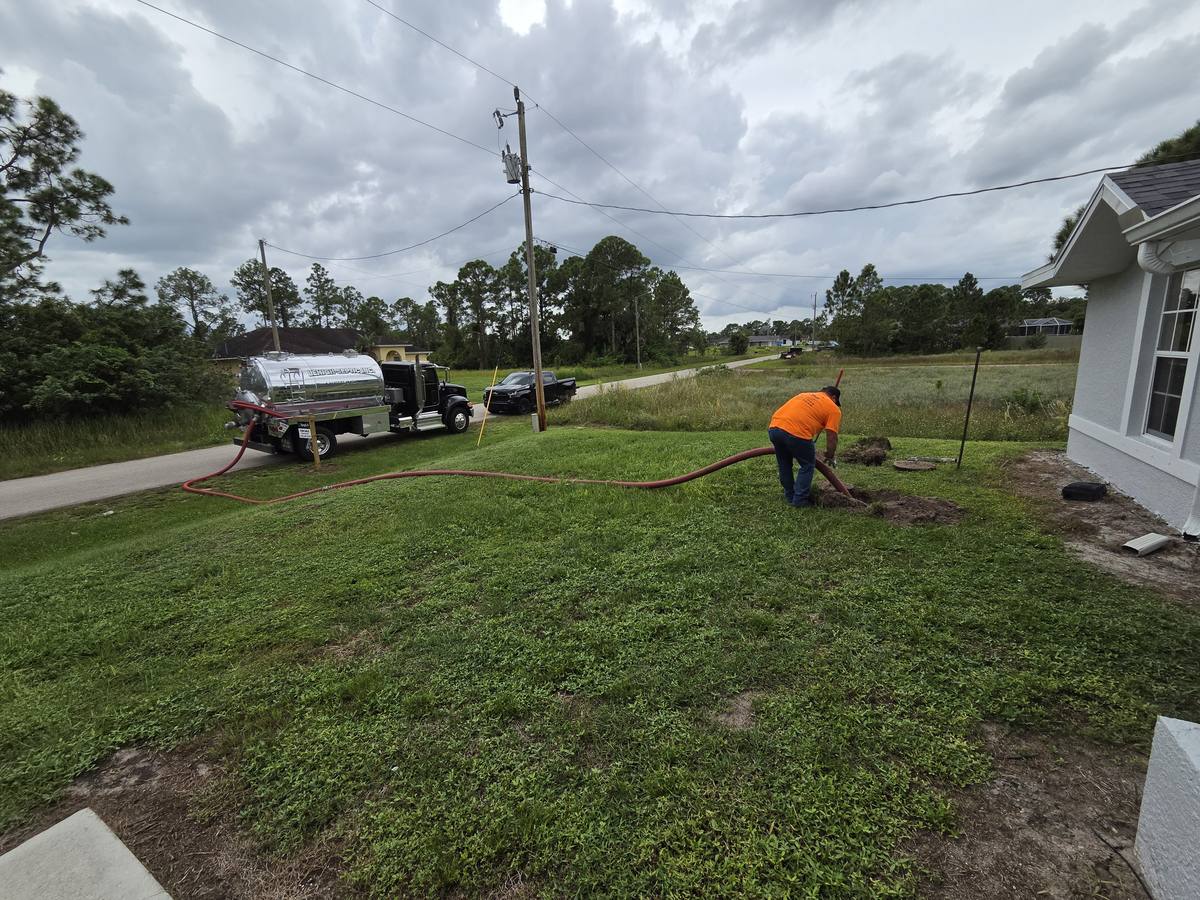
We get asked this on nearly every rural inspection in Southwest Florida, and the answer surprises people. A home inspector does not inspect the septic system. Not us, not anyone doing a standard home inspection, and anyone who tells you otherwise is describing something that is not a septic inspection. At Patriot Home Inspections we recommend a licensed septic company perform a pump-out inspection on every home we inspect that has a tank, and we tell the buyer to schedule it inside the inspection contingency. The photos in this article, from a purchase in Lehigh Acres, are the reason why.
Why a home inspector cannot inspect a septic system
A septic system is a buried concrete or plastic tank and a drain field, and everything that matters about it is underground. The lids are under a foot of soil, the baffles and the outlet filter are inside the tank, and the drain field's condition can only be judged by what the tank tells you and what the ground over the field looks like. A home inspection is a non-invasive, visual examination of the house. We can run every fixture, flush every toilet, look for wet spots in the yard, and note that the house is on a tank rather than sewer, and that is the limit of what a non-invasive inspection can see. The tank has to be opened, and in Florida it should be pumped to inspect it, because you cannot see the walls, the baffles or the filter through two feet of sludge.
Opening and pumping a tank is a licensed trade. Septic contractors in Florida are licensed by the Department of Environmental Protection, they carry the vacuum truck, and they know what a failing tank looks like because they see hundreds a year. That is the person who should write the septic report, and that is why we do not sell a septic inspection. We would be guessing from the surface, and we do not sell guesses.
What the Lehigh Acres inspection found
This house sits on a septic system in one of the thousands of Lehigh Acres lots that city sewer has never reached. We were on site for the home inspection and the buyer, on our recommendation, had a septic company there the same morning. The crew probed for the tank, dug down to the lids, pulled them, and pumped the tank.
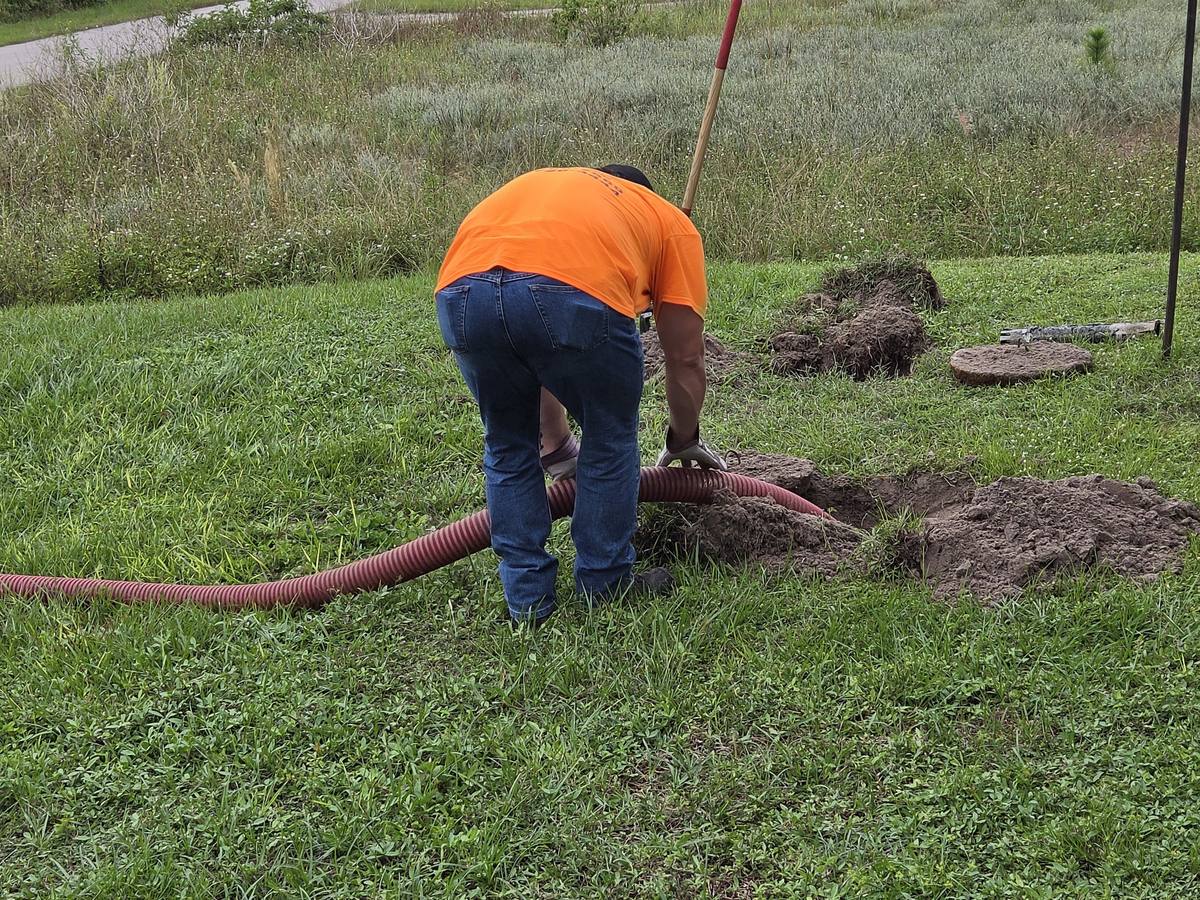
The outlet filter was clogged. That is the gray cylinder lying in the grass next to the open tank in the photo, and it is the single most important part of a modern septic tank that nobody looks at. The filter sits in the outlet baffle and stops solids from leaving the tank and reaching the drain field. When it clogs, two things happen in order. First, the tank backs up toward the house, and the buyer sees slow drains and assumes the drain field is failing. Second, if the filter is forced or bypassed, or if it has been clogged long enough that solids are working around it, those solids reach the drain field, and a drain field full of solids does not recover. It gets replaced. In Lee County that is a permitted job with an engineer's design and a price that starts in the five figures.
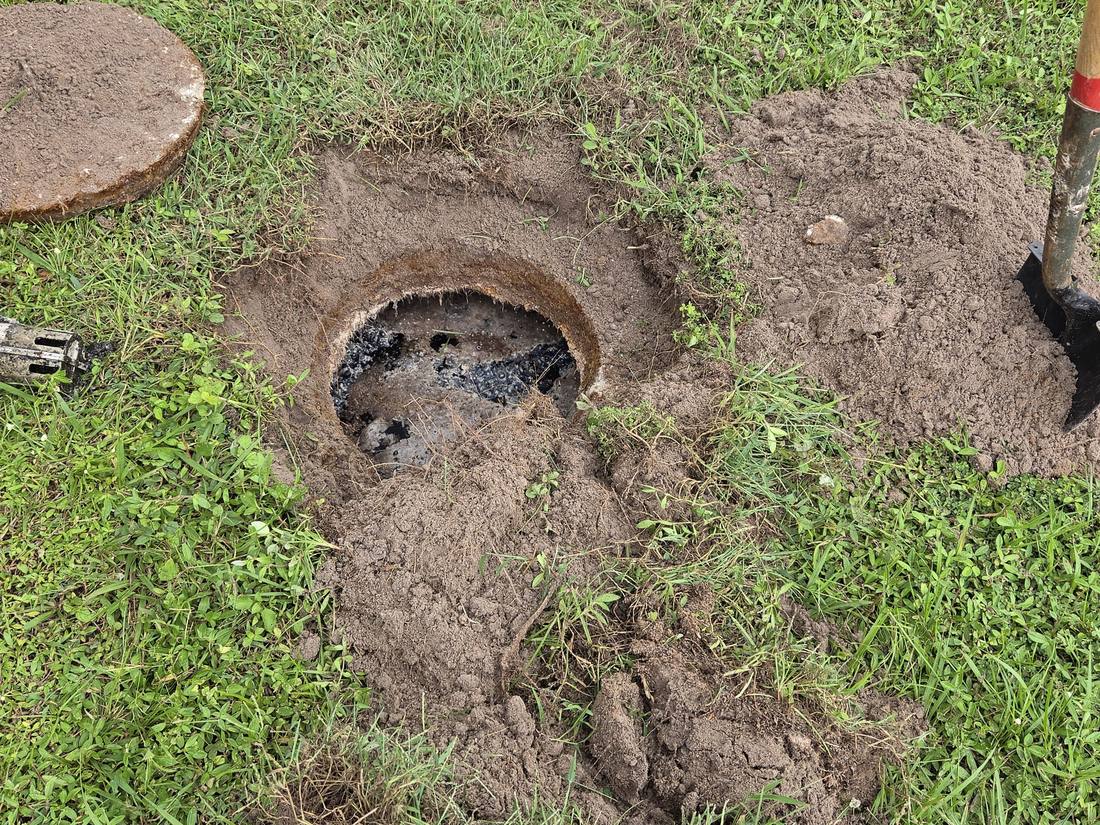
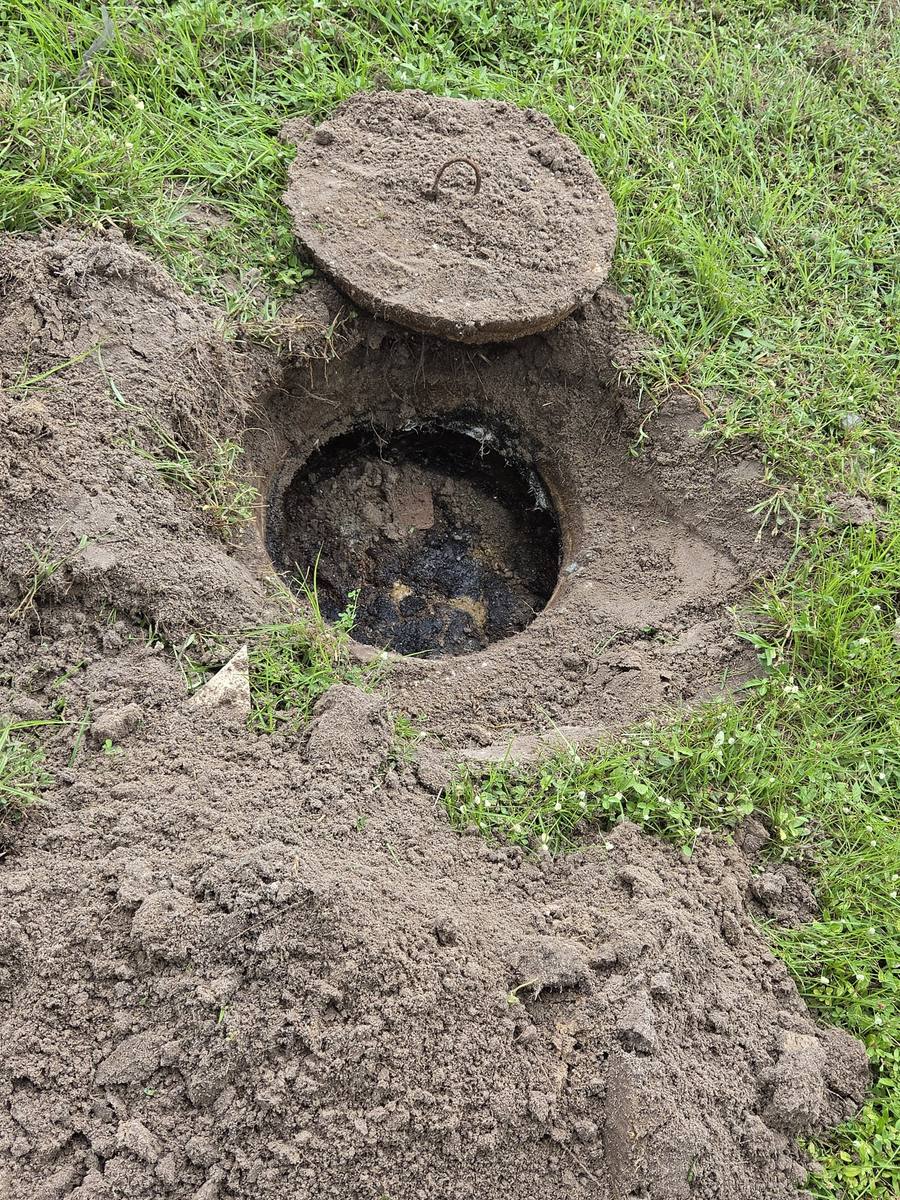
Had that filter continued to clog, the drain field on this property would have been damaged, and the buyer would have inherited it. Instead, the filter was cleaned, the tank was pumped, the contractor confirmed the tank walls and baffles were sound, and the buyer closed on a system with a known condition and a clean baseline. None of that could have been found from the surface. The grass was green, the drains were running, and the lids were under a foot of Lehigh sand. A home inspector walking that yard, including us, would have had nothing to report, and that is the whole point.
What we do on a septic property
We are not uninvolved; we just stay in our lane. On every home with a septic system we tell the buyer at booking that a septic pump-out inspection by a licensed contractor is needed, and we recommend scheduling it for the same window as the home inspection so one trip covers both. On site we locate the tank area and the drain field from the permit records and the yard, we check the ground over the field for ponding, softness, odor and unusually lush grass, we run water through the house during the inspection so the contractor sees the system under load, and we note in the report that the system is present and that the septic contractor's findings govern. If the house is on a private well, which most septic properties in Lehigh, Golden Gate Estates and North Port are, we inspect the well equipment and offer well water testing as part of the same visit, because a well and a drain field on the same lot have a relationship worth knowing about before you buy.
What a septic inspection costs and what it tells you
A pump-out inspection in Southwest Florida runs a few hundred dollars for the inspection plus the pumping, which depends on tank size and how far the lids are buried. For that you get the tank located and uncovered, the lids opened, the tank pumped, the walls, baffles, inlet, outlet and filter inspected, the liquid level and backflow checked, the drain field evaluated, and a written report. On a purchase it is the best-value inspection on the list, because the thing it protects you from, a drain field replacement, costs more than the home inspection, the septic inspection and the pump-out put together, several times over.
Where this matters in Southwest Florida
Lehigh Acres is the largest septic community in the region, with tens of thousands of homes on tanks and a sewer expansion that will take decades to reach most of them. Golden Gate Estates in Collier County is almost entirely well and septic. Alva, Buckingham and the eastern edge of North Fort Myers, large sections of North Port, Punta Gorda's rural east side, and the unsewered parts of Cape Coral all carry the same question. We inspect in every one of those areas, and we treat the septic conversation the same way in each: we tell you what we can see, we tell you what we cannot, and we tell you who to call. If you are buying on a tank in Lehigh Acres, North Fort Myers, North Port, or Golden Gate Estates, call (239) 826-5866 or book the home inspection and we will walk you through lining up the septic company for the same day.
Questions people ask about this
Do home inspectors check septic systems?
No. A septic system is outside the standards of practice for a home inspection, and the only way to inspect one properly is to pump the tank and look inside it, which a home inspector is not licensed or equipped to do. Patriot Home Inspections does not inspect septic systems and always recommends a licensed septic company perform a pump-out inspection on any home with a septic tank.
What is a septic inspection when buying a house?
A licensed septic contractor locates the tank, opens the lids, pumps it, inspects the tank walls, baffles, outlet filter and inlet for damage, checks the drain field for ponding or backflow, and reports the system's condition. In Florida it usually costs a few hundred dollars plus the pump-out, and it should be done inside the inspection contingency.
What does a well and septic inspection include?
The well side covers the pump, pressure tank, wellhead and water quality testing. The septic side is the pump-out inspection by a septic contractor. Patriot performs the well equipment review and well water testing as part of the home inspection and coordinates with the buyer so the septic company is on site during the inspection window.
What are the signs of a failing drain field?
Standing water or spongy ground over the field, sewage odor outdoors, slow drains and gurgling throughout the house, unusually green grass over the field, and backups after rain. A clogged outlet filter can mimic a failing field and, left alone, cause one.
Which Southwest Florida areas are on septic?
Most of Lehigh Acres, Golden Gate Estates, Alva, Buckingham, large parts of North Port and Cape Coral's unsewered sections, and the rural areas of Charlotte County. Many Cape Coral and Lehigh neighborhoods are mid-conversion to sewer.